


An interview with Deborah Hartwig and Abigail Loyd of Music Therapy of the Ozarks.
Interview by Jeremy Lux, article written by Eric Z. Gasa
Though only one considers themselves a musician, Deborah Hartwig, and Abigail Loyd are two women connected by both servitude and song. Together they work to bring rhythm and joy to the great folks of Missouri through their nonprofit, Music Therapy of the Ozarks. Though we may look at music as recreation or entertainment, it’s much more profound for Hartwig, Loyd, and their clients. Music is not only life and rehabilitation but also an escape.
Jeremy Lux got to chat with Hartwig and Loyd to discuss Music Therapy of the Ozarks, finding their footing in the nonprofit world, and the powerful healing effect music has on the human brain.
A musician at heart, Loyd always loved music since learning the piano when she was four. It was a passion that would follow her into adulthood and intersect with her love of helping people. Things simply clicked together when she learned about the music therapy program at Drury University and pursued her degree.
Hartwig on the other hand will be the first to admit that she’s not musically inclined but that doesn’t mean she isn’t amazed by music. Living in Springfield, MO for the past 25 years, Hartwig has always been dedicated to community and nonprofits. Today she is the development director of Music Therapy of the Ozarks.
So, what does Music Therapy of the Ozarks do exactly?
Loyd defines it perfectly when says “we give a voice to people who don’t have one, or better yet, help them find a new way to express themselves.” That new way of expression is music. She describes it as a way turn off your worries for a minute and “do something meaningful and beautiful in its own special way.”
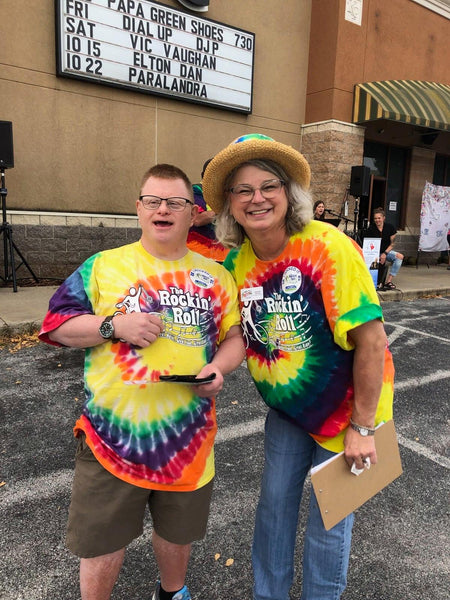
As the development director, Hartwig has been instrumental in helping the nonprofit share its message and find its very own voice as well.
“And Jeremy,” Loyd interjects, “Deborah says she’s not musically inclined, but she did learn to play the xylophone for a video of ours!”
It’s true. As a thank you, the org put together a video of their clients playing music and Deborah had the honor of playing the xylophone for the band.
“There we go. Some hidden talents there,” Lux replies.
“Absolutely. I try to hide them as much as possible,” Hartwig jokes.
But when she isn’t playing the xylophone Hartwig helps raise funds through events, grants, and donations, as well as plan programs to support scholarships. These programs include the Moral Injury Institute for vets with PTSD, Parkinson’s of the Ozarks, and Alzheimer’s of the Ozarks. As it turns out music has a profound effect on the brain and healing trauma.
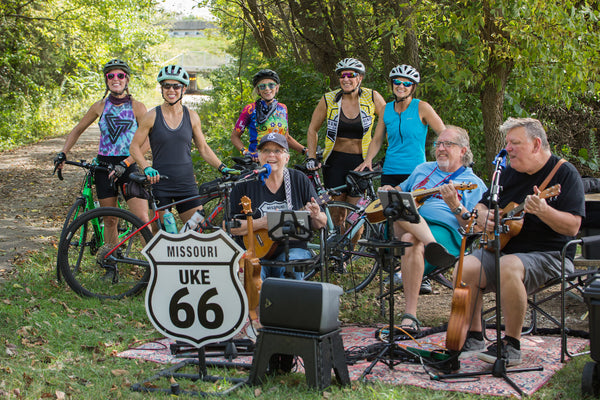
Hartwig explains how rhythm gives relief to those with Parkinson’s who struggle with their motor skills. “Music is stored in the part of the brain that Alzheimer’s can’t touch,” she says, “which is something that has always fascinated me. It’s one of the proven ways to reach these folks and its absolutely powerful.”
Loyd also brings up the amazing fact that unlike speech, music is stored throughout the entire human brain. Which means those with Alzheimer’s can easily remember the music from their youth. She says that music is a great way to tap into neuroplasticity, which is the brain’s ability to make connections throughout life. Using this method, therapists can retrain speech by using that neuroplasticity to reconnect areas of the brain that have been affected by stroke, dementia, or trauma.
It sounds almost mystical, but that is the powerful effect music has on the human mind.
“What I think is fascinating is that we once believed that our brain was divided in half and you had a creative and non-creative side, but this was proven wrong,” Loyd says. “In a test, researchers put electrodes on a musician’s brain and as they played their whole brain lit up, not just half.”
Though some of us may speak a different language while others might not speak at all, it seems like music will always be the one universal dialect that transcends all communication.

For those seeking cognitive relief, Loyd and Hartwig welcome everybody to give musical therapy a chance. “What we’re doing is using music as a tool. Our goal is never performance-based, it’s progress-based,” Loyd shares. “Our goals are just socialization and having the confidence to go onstage and receive that validation.”
Through all of life’s toils and traumas it sounds like the last thing you should underestimate is the power of a song. For Deborah Hartwig and Abigail Loyd, music is freedom.
***
To learn more about Music Therapy of the Ozarks and how you can get involved check out their website as well as connect with them on Facebook and Instagram. For the full scoop on Deborah Hartwig and Abigail Loyd, as well as client stories and the positive effects of music on newborns, check out the complete interview on the Life in Motion Podcast on Apple Podcast and Spotify.